Once, during a cross-country drive, I pulled off for the evening in a small town in Nebraska.
My first observation was that the town smelled like chicken. Duly noted. Undeterred, I chose a small motel on the main strip, the kind with neon lights outside advertising rates to passing motorists. The woman behind the counter sat with glum disinterest until I presented my California driver's license, at which point her expression shifted into something closer to disgust.
"Ugh," she said. "San Francisco. Too much water."
I had certainly heard critiques of the city I had chosen to call home, but never that one. Too much water. It still makes me laugh. It was such a strange, perfect little moment - one of those exchanges that lodges itself in memory because it reveals, almost accidentally, how differently two people can see the same thing.
One person's excess is another person's salvation.
In the years since, I have watched San Francisco become an easy target. Some of the criticism is earned. There is real suffering in the city, and anyone pretending otherwise is not looking closely. But there is also something lazy in the way San Francisco is often flattened into a symbol of decline, as though the whole place can be reduced to its most visible wounds.
That has never felt true to me.
There is a deeper reason the Bay Area keeps drawing artists, romantics, wanderers, seekers, the wild-hearted, the lost, and the hopeful. It is not only the culture, or the politics, or the mythology of the West. It is the water.
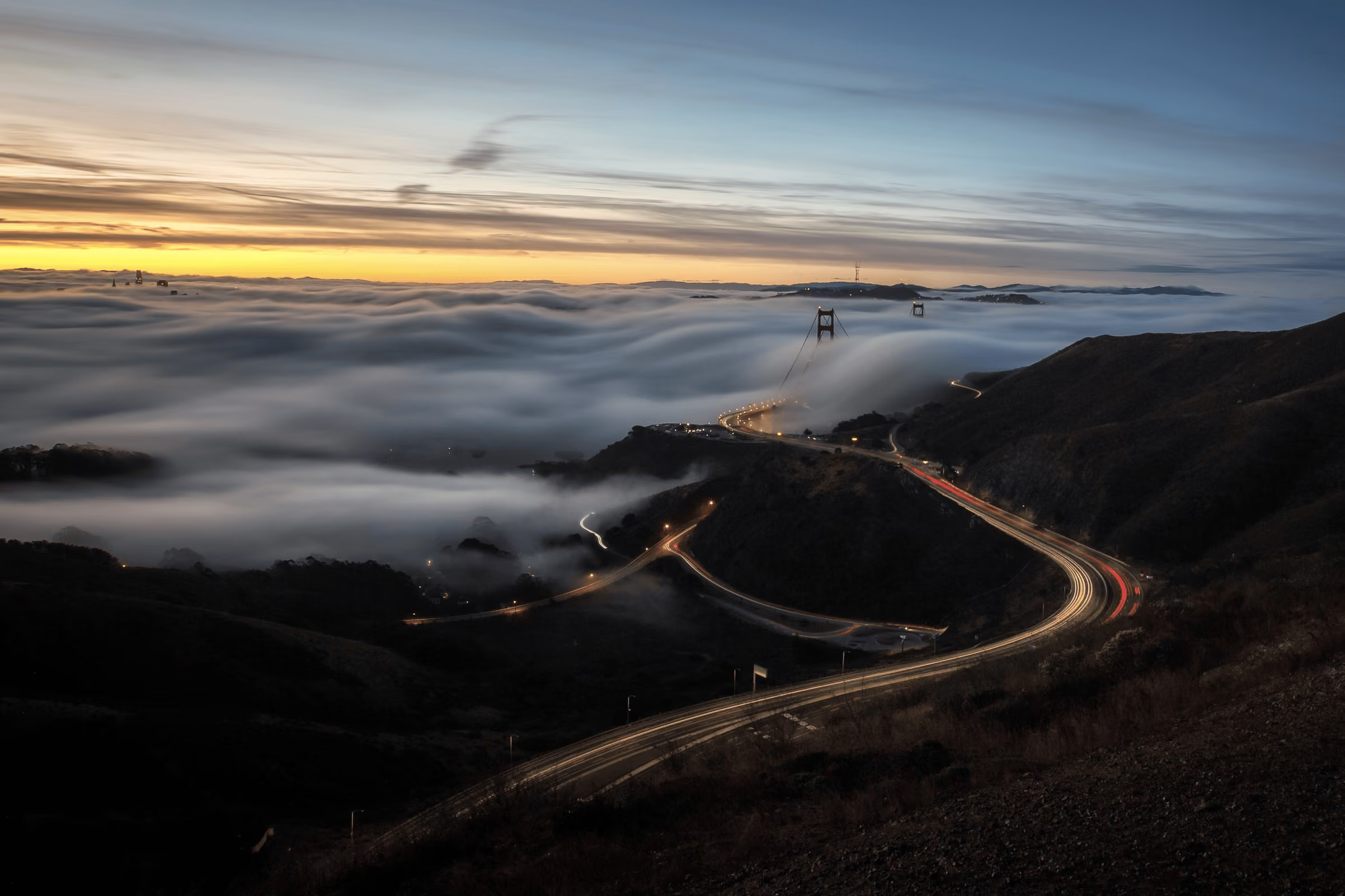
I am fortunate now to live with a view of the Golden Gate, which many people think of first as the bridge. But the Golden Gate is also the opening itself - the narrow passage where the Pacific breathes in and out of the Bay. It can be a sad place, yes. A haunted place. But it also carries a restorative force that is difficult to explain if you have not spent time watching that water move.
This place breathes water.
To miss that is to miss something essential about San Francisco.
There has always been something hypnotic to me about the tide moving through the Gate - the ocean pouring in, pulling out, carrying fog with it like a second current in the air. But I do not think I really understood why it held me until a conversation with my father earlier this year. He was turning eighty-one, and we were looking out toward the Bay when he said something like:
"Imagine being out there on one of those cargo ships, heading into the Pacific, not setting foot on land again for weeks until they reach Japan or China or some far-off port on the other side of the world."
That image stayed with me.
The Golden Gate is not just scenic. It is a threshold. A departure point. A place where the known world opens toward the vast energetic abyss of the Pacific. Whether or not we consciously acknowledge it, I think that movement affects everyone who lives near it. The water is not decorative. It is active. It pulls, clears, unsettles, restores.
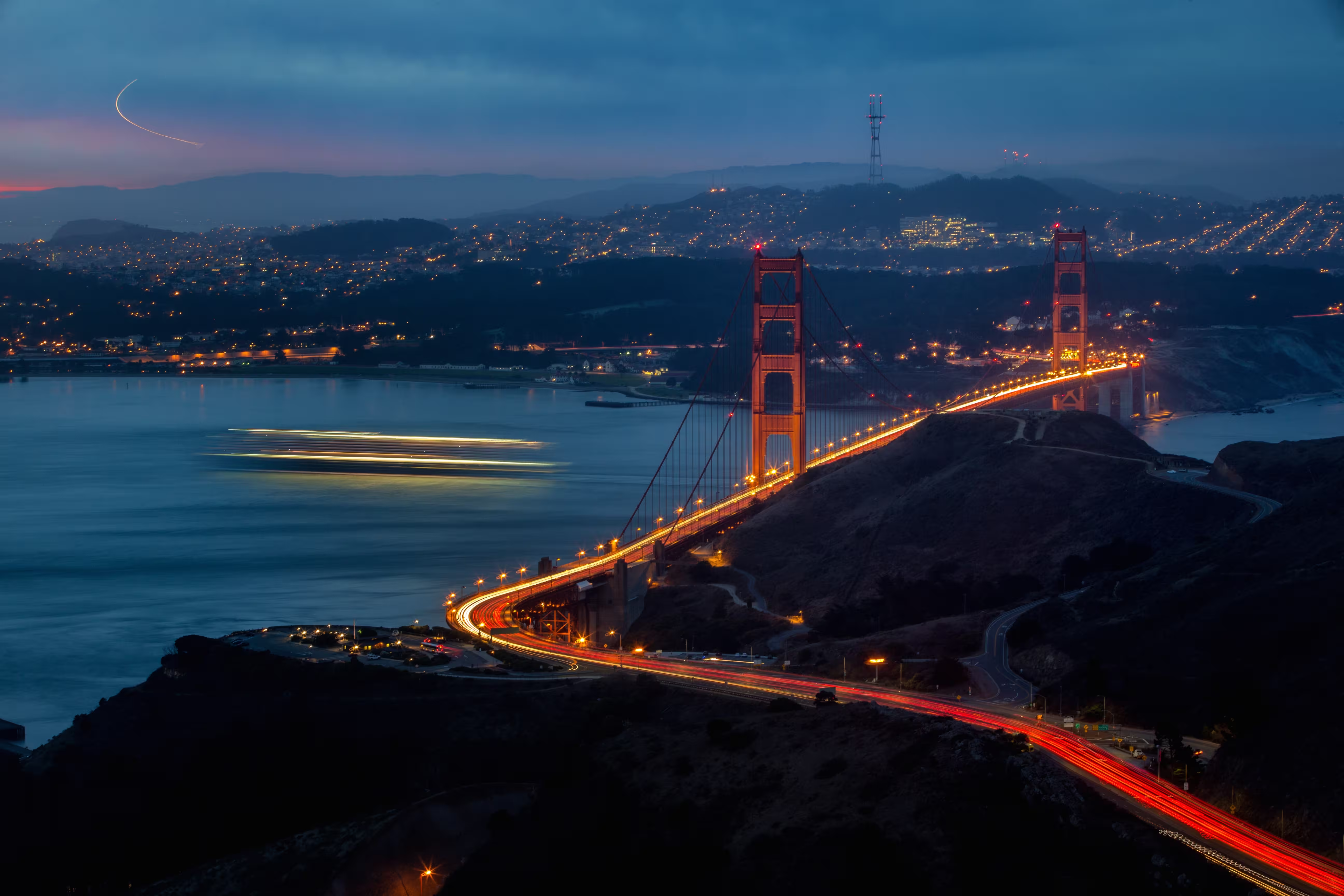
Every few hours, the tide rips into the Bay again, and with it comes a kind of fresh, diluted Pacific breath. The fog follows in its own freight-train way, spilling over the hills and softening the edges of everything. The whole region seems to inhale and exhale around it.
Call that romantic, or overly mystical, or whatever else you like. I will take the front-row seat to this earth-engine for as long as it will have me.
I need to be near water. I know that much. Preferably moving water. Water with force behind it. A tide, a current, a break, a river mouth, a coastline where you can feel the planet working. The stillness I am after has never really been stillness at all. It is motion deep enough to quiet me.
So in the end, I owe some thanks to that motel clerk in Nebraska, to that chicken-scented town, and to every person who has ever looked at San Francisco and seen only the mess.
They are not entirely wrong.
But they are missing the water.
And that is the thing about San Francisco.